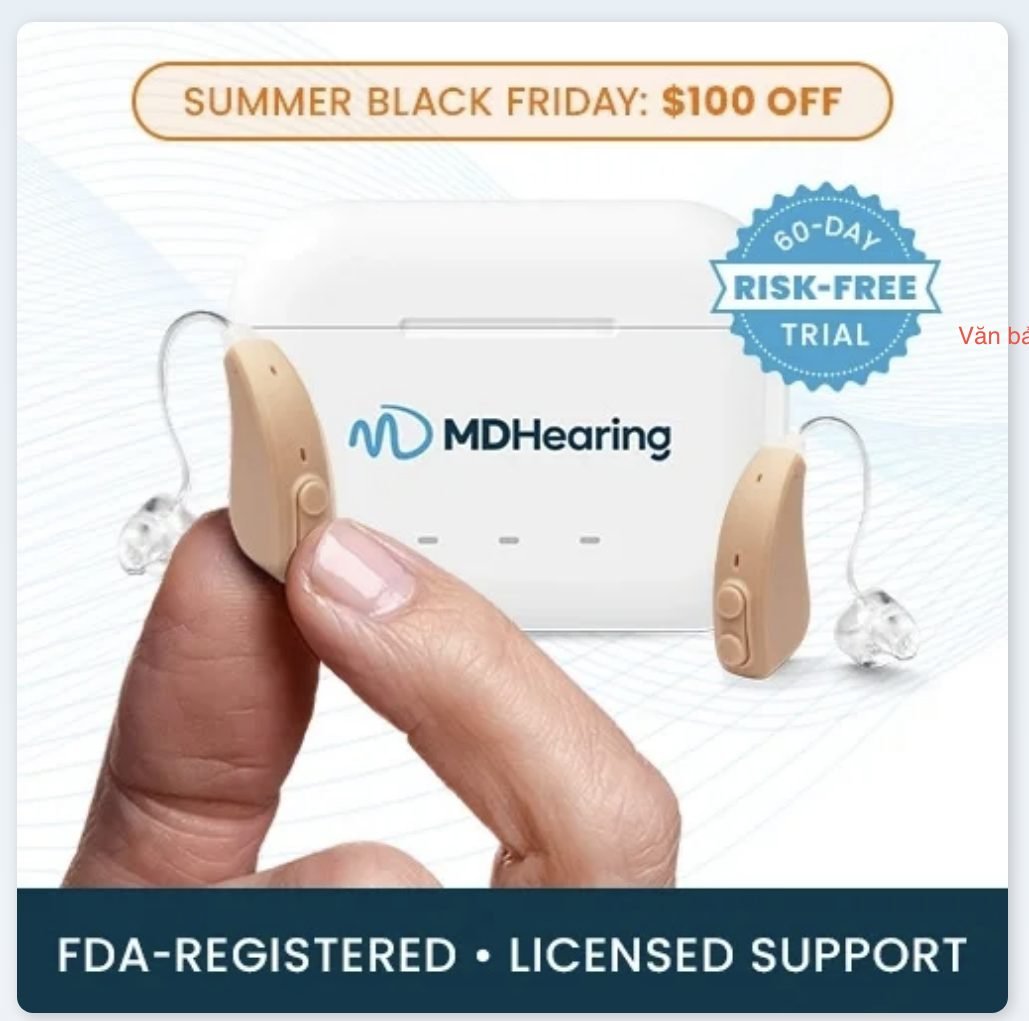
Short on time? Here’s our pick: the MDHearing NEO XS. It’s rechargeable, almost impossible to spot in the ear, and costs $297–$397 a pair — a fraction of clinic prices. For most seniors with mild to moderate hearing loss, it simply covers the essentials without the markup. If you want smartphone app control and more fine-tuning, look at the Lexie B2 Plus. And if you’re not sure what level of hearing loss you have, take Hear.com’s free online hearing test before spending anything.
Disclosure: This article contains affiliate links. If you buy through them, we may earn a commission at no extra cost to you. We only recommend products we’ve researched thoroughly.
Quick Comparison
| Hearing Aid | Price (pair) | Style | Rechargeable | App Control | Best For |
| MDHearing NEO | ~$197 | In-the-canal | Yes | No | Tightest budgets |
| MDHearing NEO XS | ~$297–397 | Invisible (CIC) | Yes | No (XS Pro: Yes) | Discretion + value |
| MDHearing VOLT | ~$397 | Behind-the-ear | Yes | Yes | All-day battery |
| Lexie B2 Plus (Bose) | ~$999 | Behind-the-ear | Yes | Yes | Tech-comfortable users |
Why Trust This Guide
Since the FDA approved over-the-counter hearing aid sales in 2022, dozens of brands have flooded the market — some excellent, some junk with a markup. We focus on brands that: are FDA-registered, offer at least a 45-day money-back trial, provide real customer support (phone, not just email), and have verifiable track records with hundreds of thousands of customers. Every product below meets all four criteria.
1. MDHearing NEO XS — Best Overall Value
Around $297–$397 per pair | 60-day risk-free trial
What we like:
Almost nobody will notice you’re wearing them — a real relief if hearing aids make you self-conscious
18-hour battery life, and the charging case extends total hearing time to about 100 hours
Free lifetime support from US-based licensed hearing professionals — you call, a real person picks up
60-day money-back trial, longer than the industry-standard 45 days
What we don’t:
Independent lab testing found speech clarity in noisy rooms is only average — fine for conversations at home or TV, weaker in a crowded restaurant
No Bluetooth streaming and no app control on the base model (the NEO XS Pro adds app control for a bit more)
Only suitable for mild to moderate hearing loss — severe loss needs prescription devices
Who it’s for: Seniors with mild to moderate hearing loss who want something discreet, simple, and backed by real phone support — without paying clinic prices of $3,000+.
Check the MDHearing NEO XS here.
2. MDHearing NEO — Best on a Tight Budget
Around $197 per pair | 60-day risk-free trial
What we like:
You can’t argue with $197. Walk into a hearing clinic and they’ll quote you ten to twenty times that for a pair
Rechargeable, 17-hour battery life
Flexible silicone tips with a small pull string — easier to insert and remove for arthritic hands
What we don’t:
Manual controls only — you adjust volume with a tiny button, no app
Amplifies noise and voices to the same degree, so busy environments get loud
Basic sound processing compared to the XS
Who it’s for: Anyone who has been putting off hearing aids because of cost. This is the “just try it” option — and with the 60-day trial, the risk is genuinely low.
3. Lexie B2 Plus (Powered by Bose) — Best App Experience
Around $999 per pair | 45-day trial
What we like:
Self-fitting through the app is genuinely impressive — closest thing to a professional fitting without an appointment
Bose sound processing handles noisy environments noticeably better than budget models
Video-call support with hearing experts, seven days a week
What we don’t:
The price — roughly double our budget cap
If you’re not comfortable with smartphones, you lose the main advantage
Behind-the-ear design is more visible than the NEO XS
Who it’s for: Seniors (or their adult children setting things up for them) who are comfortable with apps and want the best sound quality short of prescription devices. Worth stretching the budget if a phone is already part of daily life.
Not Sure Where to Start? Take a Free Hearing Test First
Here is the most common mistake we encounter: purchasing a hearing aid for yourself or your parents before knowing the actual degree of hearing loss. OTC hearing aids are only FDA-approved for mild to moderate loss. If your loss is severe, you’ll spend $400 and still struggle — and conclude wrongly that “hearing aids don’t work.”
Hear.com — the world’s largest hearing aid provider, operating in 8 countries — offers a free 10-question online hearing assessment. It takes about 3 minutes, and at the end you’ll know whether OTC devices are right for you or whether you should see an audiologist. It costs nothing and can save you from a $400 mistake.
Take the free 3-minute hearing test here.
How We Chose
We evaluated 14 OTC hearing aid brands sold in the US against four criteria: FDA registration, trial period of at least 45 days, availability of human phone support (tested by calling), and independent lab or editorial reviews from sources like NCOA, SeniorLiving.org, and HearAdvisor. We prioritized value for mild-to-moderate hearing loss, which covers the majority of age-related hearing decline. We do earn commissions from some links on this page, but no brand paid for placement, and we note the weaknesses of every product we recommend.
Frequently Asked Questions
Do OTC hearing aids really work?
For mild to moderate hearing loss — yes. A 2023 study in JAMA found self-fitted OTC hearing aids delivered outcomes comparable to audiologist-fitted devices for this group. For severe hearing loss, no — you need prescription devices.
What’s the difference between OTC hearing aids and cheap “amplifiers” on Amazon?
FDA-registered OTC hearing aids process sound selectively (amplifying speech frequencies, managing feedback). “Personal sound amplifiers” (PSAPs) costing $50–$100 just make everything louder, including noise. If a product page doesn’t say “FDA-registered hearing aid,” it’s an amplifier.
Will Medicare pay for these?
Original Medicare does not cover hearing aids. Some Medicare Advantage plans offer partial hearing benefits — check your specific plan. The low price of OTC devices is partly a response to this coverage gap.
How long do OTC hearing aids last?
Typically 3–5 years with daily use. Rechargeable batteries degrade over time like any device — another reason the trial period and warranty matter.
Can I return them if they don’t help?
Every product on this list has at least a 45-day money-back trial (MDHearing offers 60 days). Use the full trial — your brain needs 2–4 weeks to adapt to hearing aids, so don’t judge them in the first three days.
Bottom Line
Start with a free hearing test at Hear.com to confirm OTC devices suit your level of hearing loss. If they do, the MDHearing NEO XS is the best value for most seniors — discreet, supported, and risk-free for 60 days. On the tightest budget, the NEO at $197 is a legitimate way to stop putting it off. And if you live on your smartphone, the Lexie B2 Plus justifies its higher price with genuinely better sound.
Untreated hearing loss doesn’t just mean a louder TV. It slowly cuts you off from phone calls, dinner conversations, and the grandkids’ stories — and research links it to faster cognitive decline. Pick the option that fits your budget and start the trial this week. Sixty days is plenty of time to change your mind.